What to Set Aside Before a Property or Estate Cleanout
Protect documents and irreplaceable items first. Then separate ordinary removal from donation candidates and material that needs a different disposal route.
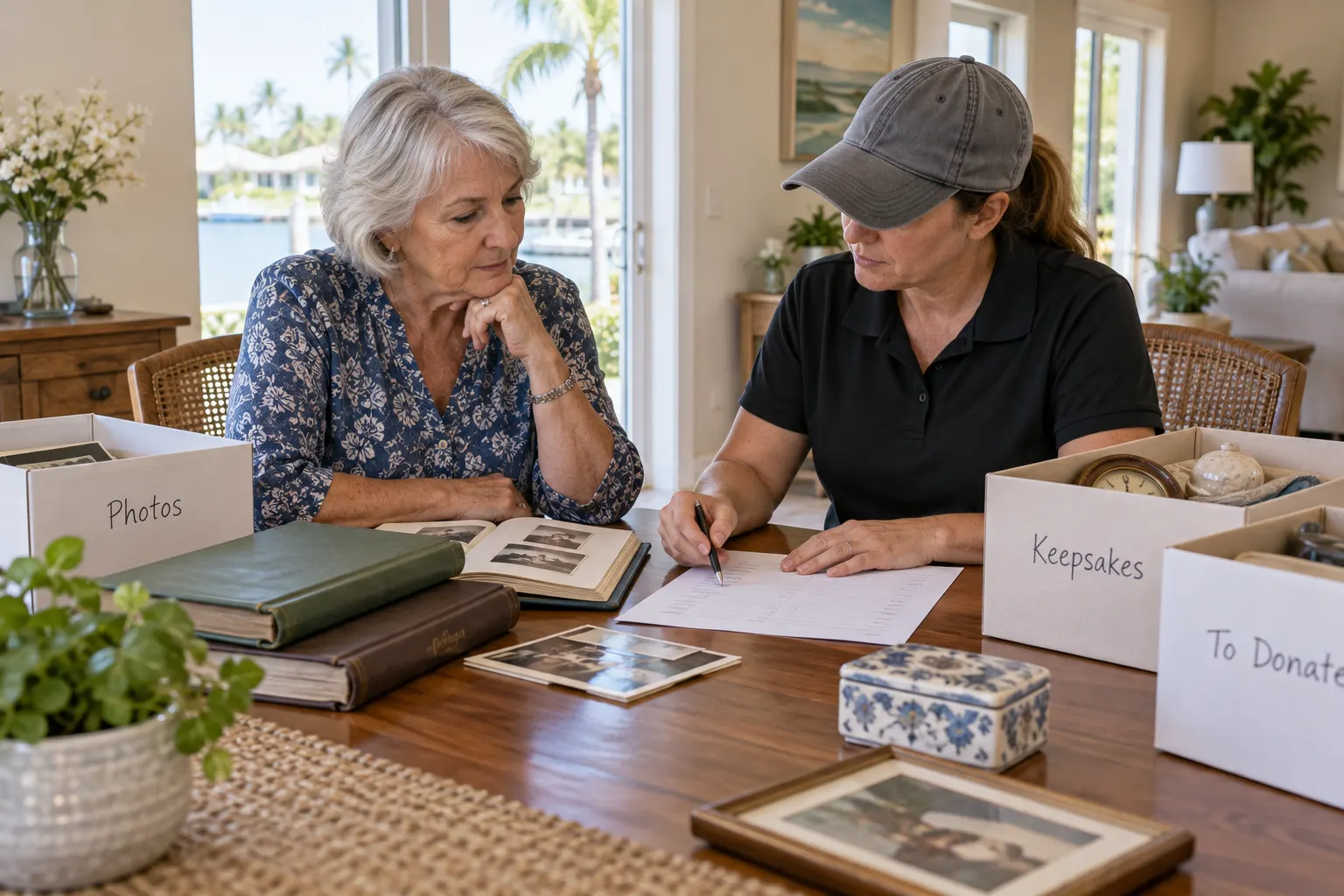
Before a property or estate cleanout, remove documents, keys, medication, jewelry, photographs, digital devices, and anything with legal or sentimental value. Do that before creating a donation or removal pile. The goal of the first pass is protection, not speed.
Make a protected first-pass box
Use a locking room, a vehicle, or a clearly separated container for material that should never enter the work zone:
- Driver’s licenses, passports, Social Security and Medicare cards
- Tax returns, bank statements, checkbooks, titles, deeds, and insurance papers
- House, vehicle, mailbox, safe-deposit, and storage keys
- Medication, medical devices, and advance-directive documents
- Cash, jewelry, coins, firearms, and small valuables
- Photos, letters, albums, heirlooms, and items promised to family
- Phones, computers, drives, memory cards, and account-recovery devices
The Federal Trade Commission recommends shredding documents with personal or financial information before disposal. If a shredder is unavailable, it suggests a local shred day or blocking out account numbers.
Consumer source: Federal Trade Commission, What To Know About Identity Theft, United States; retrieved September 17, 2026.
Use one room-by-room decision sheet
| Area | Look for before removal | Common complication |
|---|---|---|
| Kitchen | Keys, documents, medication, small appliances, food, cleaning chemicals | Refrigerator connections and unknown containers |
| Bedrooms | Jewelry, cash, photos, paperwork, devices, medication | Mattresses, adjustable bases, and items inside drawers |
| Office | Tax records, drives, passwords, account papers, identity documents | Personal data in both paper and electronic form |
| Garage | Tools, titles, keys, fuels, paint, pesticides, batteries | Hazardous material mixed with ordinary clutter |
| Patio or shed | Propane, pool chemicals, fuel, powered equipment, spare keys | Weather damage and pressurized containers |
Finish one room before opening the next. A single written inventory is easier to reconcile than different family members keeping separate phone notes.
Separate material that cannot join the ordinary load
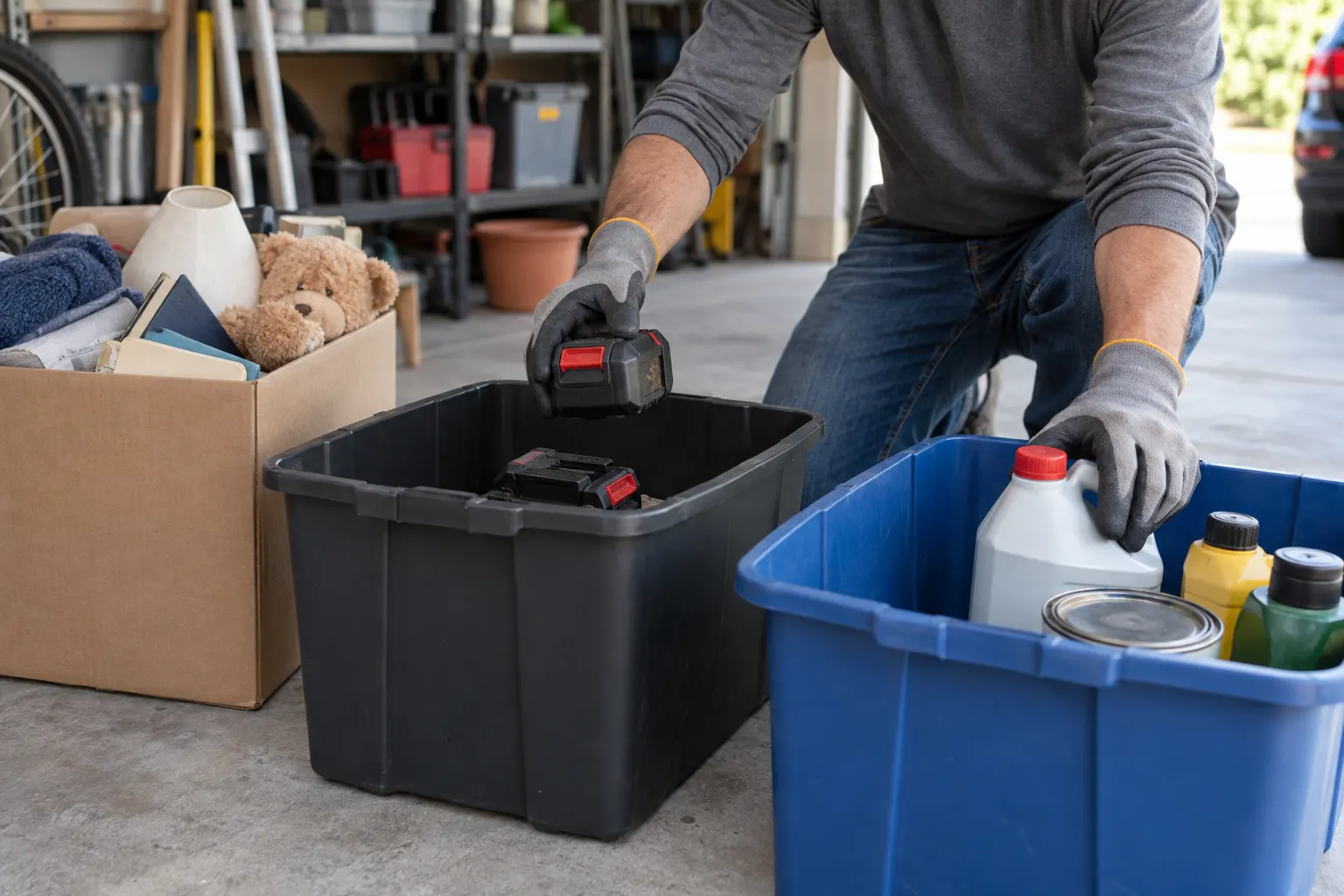
Lee County directs residents to the Topaz Court facility for many household chemicals and electronics. Its accepted-material list includes cleaners, antifreeze, fluorescent bulbs, and rechargeable batteries. The county also publishes mobile household chemical-waste events, including dates in Estero, but schedules change.
Local sources: Lee County Solid Waste, Household Chemicals and Collection Events, Lee County residential waste; retrieved September 17, 2026.
Do not mix paints, fuels, pesticides, rechargeable batteries, fluorescent lamps, ammunition, compressed gas, medical sharps, asbestos, or unknown liquids with ordinary removal. Keep original labels intact when present and do not open a container to investigate.
Name one person who can make removal decisions
A cleanout stalls when several people give different instructions. Choose one authorized point of contact for the crew and one clearly marked review area for disputed items. If probate, tenancy, insurance, or ownership is unresolved, pause before removing property.
Decision log
- Who owns or controls the property?
- Who can authorize removal?
- Which rooms or containers are off-limits?
- What must receive family review?
- What date closes the review period?
- Who receives receipts or disposal records, if needed?
Questions for a cleanout provider
- Will the scope be confirmed room by room before loading?
- Which items are excluded or require a separate service?
- How are additions to the scope priced?
- Can the crew stop and ask when an item appears personal or valuable?
- What building access, parking, or elevator arrangements are required?
- What happens to items presented as potential donations if no organization accepts them?
Review the property cleanout service for inside carrying and loading. For one crowded bay rather than a whole property, use the garage cleanout plan.
Need the carrying and loading handled?
Call or text 941-876-8609 with the item list, service address, and access details. Confirm accepted items and current availability before setting anything out.
Call 941-876-8609