How to Prepare a Refrigerator or Freezer for Removal
Empty and defrost the unit, dry it thoroughly, secure loose parts, measure the route, and leave refrigerant work to qualified people in the disposal chain.
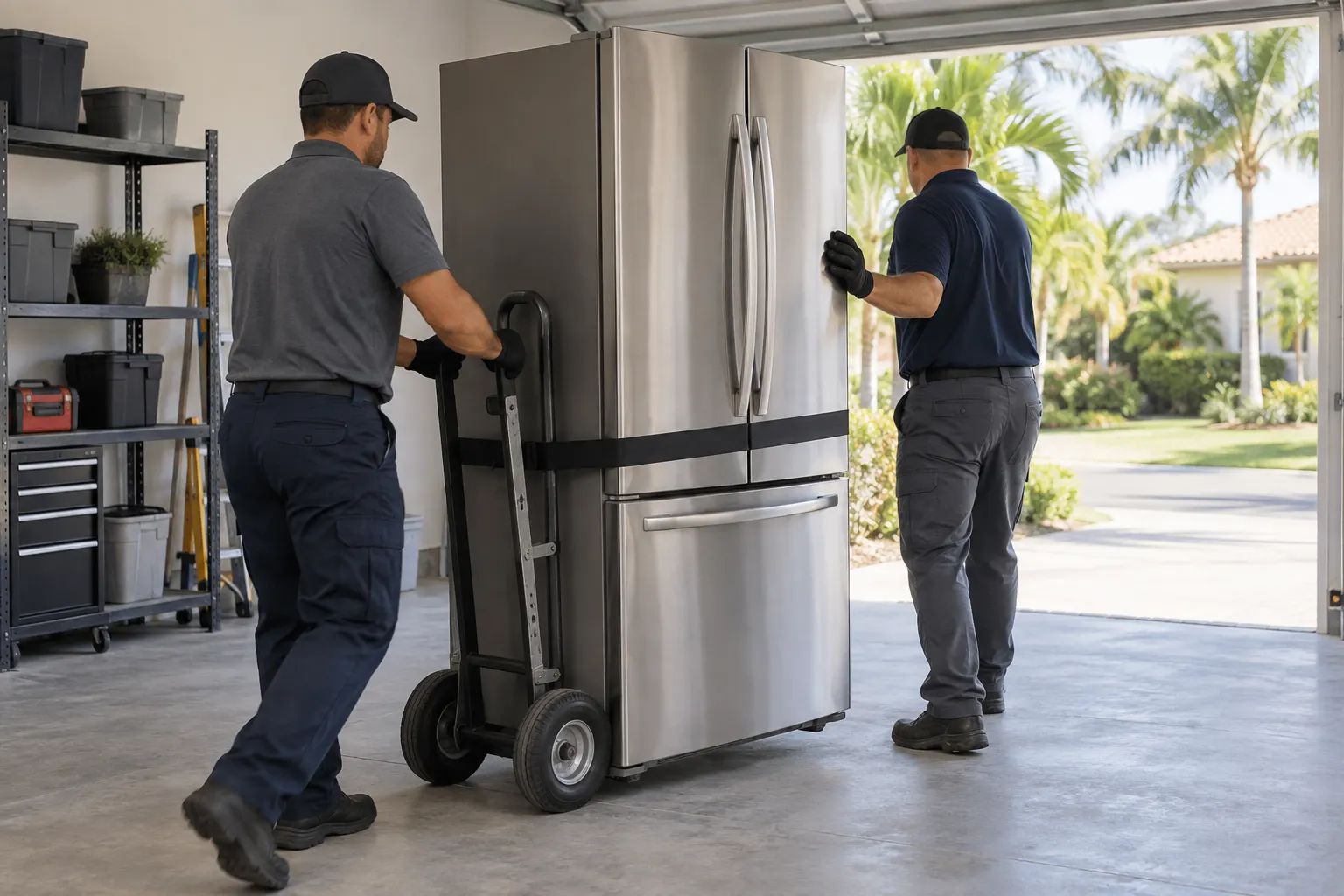
Prepare a refrigerator or freezer by removing food, unplugging it at an appropriate time, defrosting and drying the interior, securing removable shelves, and measuring every doorway on the exit route. Do not cut refrigerant lines, remove the compressor, or try to vent the system.
A practical preparation timeline
| When | Task | Why |
|---|---|---|
| Several days before | Use, donate, or transfer food; confirm the pickup method and refrigerant-aware disposal route. | Food and ice add mess, weight, and delay. |
| 24–48 hours before | Unplug when safe for the food plan, open the doors, and let frost melt into towels or a shallow tray. | A frozen interior can leak during the carry. |
| After defrosting | Clean and dry the interior; remove or secure loose bins and shelves. | Loose parts can shift or break. |
| Before arrival | Measure doors and clear the path. Protect floors if needed. | The crew needs a route wider than the appliance and handling equipment. |
Follow the appliance manufacturer’s instructions when they differ. Some models have water lines, anti-tip hardware, smart-home connections, or unusual transport limits. Use an appropriate trade professional for a connection you are not qualified to disconnect.
Why the cooling system changes the disposal plan
The U.S. Environmental Protection Agency says household refrigerators, freezers, window air conditioners, dehumidifiers, and similar equipment are subject to safe-disposal requirements. The final person in the disposal chain must ensure refrigerant is recovered before final disposal. If refrigerant was removed earlier, documentation is required for the final processor.
That is why a homeowner should not puncture a line or dismantle the sealed system. Ask the collector where the unit goes and how refrigerant recovery is handled.
Federal source: U.S. Environmental Protection Agency, Appliance Disposal and Stationary Refrigeration Safe Disposal Requirements, United States; retrieved September 17, 2026.
Measure the whole route, not only the front door
- Appliance width, depth, and height, including handles and hinges
- Kitchen doorway and any tight turn immediately outside it
- Hallway width at baseboards, railings, and protruding trim
- Stair width, landing depth, and overhead clearance
- Gate, elevator, garage-door, and loading-area clearance
If a door or handle must be removed, confirm who will do it and whether the work is included. A water line, electrical circuit, or gas connection may require separate preparation.
Pickup checklist
- The appliance is empty, defrosted, and dry.
- Loose shelves and bins are removed or secured.
- Water supply and utilities are safely disconnected.
- The route is clear of rugs, pets, people, and breakable items.
- The collector knows the model type, location, stairs, and door clearance.
- The disposal route accounts for refrigerant and other regulated components.
Questions to ask a removal provider
- Do you accept this exact appliance type?
- Is inside removal included?
- Who handles any required door, utility, or built-in disconnection?
- How does the appliance reach a compliant recycler or disposal facility?
- What access details could change the estimate?
Review the appliance removal service when the unit needs to be carried from inside. For multiple items in a garage, the garage cleanout plan helps separate appliances from ordinary clutter.
Need the carrying and loading handled?
Call or text 941-876-8609 with the item list, service address, and access details. Confirm accepted items and current availability before setting anything out.
Call 941-876-8609